


.png)
- 28/08/2026
- Dr. Kunaal Shinde
- 0 Comments
- Blog
Laparoscopic Hysterectomy: When Is Uterus Removal Surgery Needed?
If your doctor has mentioned a hysterectomy, you probably have a dozen questions running through your mind. Laparoscopic hysterectomy has become one of the most trusted ways to perform uterus removal surgery today, thanks to smaller cuts, less pain, and quicker healing. This guide helps you determine when the surgery is truly necessary, what to expect, and how to make a confident, informed decision.
What Is a Laparoscopic Hysterectomy?
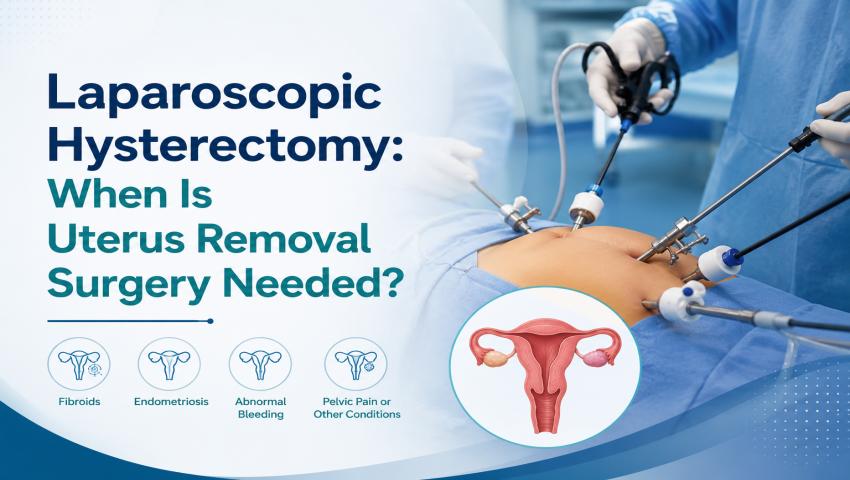
A laparoscopic hysterectomy is a surgery that removes the uterus through a few small cuts in the belly. The surgeon uses a thin camera called a laparoscope to see inside, along with slim instruments to do the work.
Compared to open surgery, this method avoids one large incision. That means less scarring, lower blood loss, and a faster return to normal life for most women.
Many women researching laparoscopic hysterectomy as an option for uterus removal surgery find it appealing because hospital stays are often just one to two days. Recovery at home usually takes two to four weeks, compared to six weeks or more with open surgery.
Signs Your Doctor May Suggest Uterus Removal:
Not every pelvic problem needs surgery. But certain patterns push doctors towards recommending it.
Your gynaecologist may bring up uterine removal surgery if you have:
- Heavy periods that don’t respond to medicine or other treatments
- Severe pelvic pain that disrupts daily life
- Abnormal bleeding between periods or after menopause
- A uterus that has grown large from fibroids
- Pressure on the bladder or bowel from pelvic organs
- Confirmed or suspected cancer of the uterus, cervix, or ovaries
If these symptoms sound familiar, it’s worth getting evaluated early. Waiting too long can sometimes make treatment options more limited.
Conditions That Often Lead to This Surgery:
Several gynaecological conditions commonly lead women towards a laparoscopic hysterectomy. Here’s a quick look at the most frequent ones.
Each condition has its own treatment ladder. Surgery usually comes after simpler options have been tried or ruled out.
When Is a Hysterectomy Necessary, and When Is It a Choice?
Not every case is the same. Some situations leave little room for choice, while others are more about lifestyle and comfort.
Hysterectomy is often necessary when:
- Cancer is confirmed in the uterus, cervix, or ovaries.
- Bleeding is severe enough to threaten your health.
- Other treatments have failed to control dangerous symptoms.
Hysterectomy may be a choice when:
- Fibroids cause discomfort but aren’t dangerous.
- You’ve completed your family and want a permanent solution to heavy periods.
- Medication or minor procedures haven’t given lasting relief
A good gynaecologist will always lay out non-surgical options first. Uterus removal surgery should feel like an informed decision, not a rushed one.
Laparoscopic vs Open vs Robotic: What's the Difference?
Choosing a surgical approach can feel confusing. Each method has its own strengths, and the right one depends on your case.
According to guidance from the American College of Obstetricians and Gynaecologists, minimally invasive approaches like laparoscopy are generally preferred over open surgery whenever they are medically appropriate. For most women, a laparoscopic hysterectomy often provides the best balance of precision, safety, and recovery speed.
Questions to Ask Your Gynaecologist First:
Before agreeing to any surgery, it helps to walk in prepared. Bring a notebook, or just remember these points.
- Why is a hysterectomy the recommended option for me?
- Are there non-surgical treatments I haven’t tried yet?
- Will my ovaries be removed too, or only the uterus?
- What surgical approach do you recommend, and why?
- What are the risks specific to my case?
- How long is recovery, and when can I return to work?
- What happens to my hormones and periods afterwards?
Asking these questions builds trust with your surgeon. It also helps you feel confident about your final decision.
What Changes in Your Body After Uterus Removal?
Life after surgery looks different for everyone, depending on what exactly was removed. Understanding these changes ahead of time reduces anxiety later.
If only the uterus is removed:
- Periods stop completely
- Pregnancy is no longer possible.
- Ovaries keep producing hormones, so natural menopause timing usually stays the same.
If ovaries are removed too:
- Menopause begins immediately, regardless of age.
- Hot flashes, mood shifts, and vaginal dryness may appear.
- Hormone therapy might be discussed to ease the transition
Physically, most women feel tired for the first couple of weeks. Light walking is usually encouraged early, while heavy lifting stays off-limits for about six weeks. The NHS guide on hysterectomy recovery offers useful general timelines, though your surgeon’s specific instructions always come first.
Emotionally, some women feel relief from years of pain. Others need time to process the loss of fertility. Both reactions are completely normal.
Meet Dr. Kunaal Shinde: Laparoscopic & Robotic Gynaec Surgeon

Dr. Kunaal Shinde
Dr Kunaal Shinde is a trusted gynaec laparoscopic surgeon known for his precise, minimally invasive approach to women’s health. His practice focuses on laparoscopic and robotic techniques for a wide range of gynaecological conditions, including fibroids, endometriosis, and uterine prolapse.Patients often mention his patient-first approach. He takes time to explain every option clearly, so women never feel pressured into a decision they aren’t ready for.
With 15+ years of hands-on surgical experience, Dr Kunaal Shinde has helped many women return to normal life faster through advanced, minimally invasive uterus removal surgery techniques.
Book a Consultation Before Deciding:
Surgery is a big decision, and you deserve clarity before moving forward. A one-on-one consultation gives you space to ask questions, discuss your history, and understand every available option.
If you’re searching for a reliable gynaecologist in Baner, Dr Shinde’s clinic offers detailed evaluations to determine whether a laparoscopic hysterectomy fits your specific case.
Don’t wait until symptoms worsen. Early conversations often lead to better, less invasive outcomes.
Conclusion:
Deciding on a laparoscopic hysterectomy is never a small choice, but it doesn’t have to feel overwhelming either. With the right information and an experienced surgeon guiding you, uterus removal surgery can bring genuine relief from years of pain or heavy bleeding.
Every woman’s body and history are different. What matters most is choosing a path that fits your health, your goals, and your comfort level. If you think this surgery might be right for you, reach out for a proper evaluation before making any final decision.
FAQs:
Laparoscopic hysterectomy cost in India generally ranges between ₹60,000 and ₹2,50,000. The exact price depends on your hospital, city, surgeon’s experience, and whether ovaries are removed too. Most health insurance plans cover the procedure since it’s considered medically necessary. Always ask for a detailed cost breakdown during your consultation.
Yes, some side effects are possible. Short term, you may feel tired, sore, or bloated. If ovaries are removed, you’ll enter menopause immediately, causing hot flashes and mood changes. Most side effects fade within weeks, and your surgeon will guide you through managing them safely.
There’s no single best age. Most hysterectomies happen between 40 and 50, once childbearing is complete and symptoms become severe. Surgery before 35 carries higher long-term health risks. Your doctor will weigh your age, symptoms, and future plans before recommending surgery.
Hysterectomy alone doesn’t directly cause weight gain; research shows only a small average increase. However, removing both ovaries can slow metabolism due to hormone changes. Staying active, eating balanced meals, and following your surgeon’s recovery advice help you maintain a healthy weight afterwards.
Most women don’t lose sexual desire or pleasure after hysterectomy. In fact, many report improved intimacy once chronic pain and heavy bleeding are gone. Vaginal dryness can occur if ovaries are removed, but this is manageable with simple treatments your doctor can suggest.
For expert, minimally invasive care, book a consultation with Dr. Kunaal Shinde at Love Your Belly clinic. He specializes in laparoscopic and robotic hysterectomy, guiding women through safe treatment options with honest advice, personalised care, and faster recovery outcomes tailored to your specific condition