


.png)
- 25/06/2026
- Dr. Kunaal Shinde
- 0 Comments
- Blog
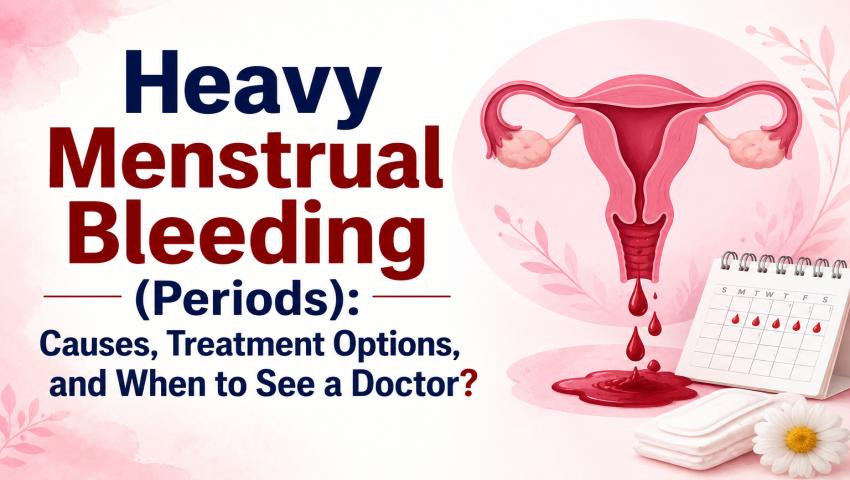
Heavy Menstrual Bleeding (Periods): Causes, Treatment Options, and When to See a Doctor?
Heavy menstrual bleeding — also called menorrhagia — means your period is heavier or longer than normal in a way that disrupts your daily life.
Medically, it refers to bleeding that lasts more than 7 days or involves so much blood loss that it affects your routine. But the simpler measure is this: if your periods stop you from going to work, stepping out of the house, or sleeping through the night, that is a problem worth addressing.
Quick signs to check:
- Soaking through a pad or tampon every hour for two or more hours in a row
- Passing blood clots larger than a 50-paise coin
- Periods lasting longer than a week
- Needing double protection (two pads at once) at any point
- Feeling tired, dizzy, or breathless around your period
Common Causes of Heavy Menstrual Bleeding:
Heavy periods do not happen without a reason. In most cases, there is an underlying condition that needs attention.
- Hormonal imbalance is one of the most frequent causes. When estrogen and progesterone are out of balance — due to thyroid disorders, PCOS, or anovulation — the uterine lining builds up too much and sheds heavily.
- Uterine fibroids are non-cancerous growths in the uterine wall that can cause prolonged, heavy bleeding along with pelvic pressure. If fibroids are suspected, Fibroids Treatment in Baner with minimally invasive options can make a significant difference.
- Endometriosis — where tissue similar to the uterine lining grows outside the uterus — is another major cause of painful, heavy periods that are often overlooked for years. Early evaluation for Endometriosis Treatment in Baner can prevent long-term complications.
Other causes include:
- Uterine polyps (small benign growths on the uterine lining)
- Adenomyosis (endometrial tissue growing into the uterine muscle)
- Bleeding disorders like Von Willebrand disease
- Certain medications including blood thinners and non-hormonal IUDs
- In rare cases, uterine or cervical cancer — which is why evaluation matters
Warning Signs You Should Not Ignore:
Most heavy periods are not emergencies. But some signs tell you to act sooner rather than later.
See a doctor promptly if you notice:
- Bleeding so heavy that you soak through a pad every 30–45 minutes for 2+ hours straight
- Passing very large clots repeatedly
- Bleeding between periods or after sex
- Pelvic pain that is getting progressively worse
- Extreme fatigue, shortness of breath, or pale skin — these are signs of anaemia
- Any bleeding after menopause — this is never normal and needs immediate evaluation
Do not wait to see if it gets better on its own. Heavy periods tend to worsen over time when the underlying cause goes untreated.
How Is Heavy Menstrual Bleeding Diagnosed?
Diagnosis begins with a conversation. Your doctor will ask about your menstrual history, how many pads you use, whether you pass clots, and how bleeding affects your daily life. That cycle-tracking diary you kept? This is exactly where it helps.
After the history, investigations are typically recommended:
Not all tests are needed for everyone. Your doctor will recommend based on your age, symptoms, and clinical examination. The goal is to find the cause — not just manage the bleeding.
Treatment Options for Heavy Periods — Medicines and Procedures:
Medicines That Help Manage Heavy Bleeding Medication is usually where treatment begins, and for many women it is all that is needed.
Non-hormonal options:
- Tranexamic acid reduces blood loss by helping blood clot more effectively. Taken only on heavy bleeding days.
- NSAIDs such as ibuprofen or mefenamic acid ease both bleeding and cramps. Most effective when started just before your period begins.
Hormonal options:
- Combined oral contraceptive pills regulate cycles and reduce flow significantly.
- Progesterone-only pills or injections work well when oestrogen is not an option.
- Hormonal IUD such as Mirena releases low-dose progesterone locally and can cut bleeding by up to 90% over time.
- GnRH agonists temporarily stop periods, most commonly used before surgery to reduce fibroid size.
Your doctor will recommend the right option based on your age, the cause of bleeding, and your future pregnancy plans. Never take any medicine without a doctor’s prescription or proper medical supervision.
When a Procedure or Surgery Becomes the Right Choice?
If medicines are not giving you enough relief, or if there is a physical cause such as fibroids or polyps, a procedure may be the better path.
- Endometrial ablation targets the uterine lining and significantly reduces or stops periods. Not recommended for women planning a future pregnancy.
- Polypectomy or myomectomy removes fibroids or polyps while preserving the uterus. Most are done laparoscopically with minimal downtime.
- Hysterectomy is a permanent solution considered when all other options have been exhausted or the condition is severe. With laparoscopic surgery, most women are home within 2 to 3 days and recover much faster than with open surgery.
Surgery is always the last resort — but for the right patient, it offers lasting relief.
When Should You See a Gynaecologist for Heavy Periods?
Heavy periods are not normal — and you do not have to put up with them every month.
If you are soaking through pads quickly, bleeding for more than seven days, passing large clots, or feeling exhausted after every cycle, your body is telling you something is wrong. When pain starts affecting your work, sleep, or daily life, that is your sign to see a doctor.
Heavy bleeding is often caused by fibroids, endometriosis, or adenomyosis — conditions that are very treatable once identified.
Dr. Kunaal Shinde has over 15 years of experience helping women in Baner find the real cause of their symptoms and treating it with minimally invasive techniques — less pain, quicker recovery, and no unnecessary procedures.
Consult Dr. Kunaal Shinde for Menstrual Disorder Treatment in Baner:
If heavy periods are affecting your quality of life, you deserve more than just managing the pain each month.
Dr. Kunaal Shinde is a Best Gyneacologist in Baner with over 15 years of experience in advanced laparoscopic and robotic gynaecological surgery. He specialises in treating the conditions most commonly linked to heavy bleeding — endometriosis, fibroids, adenomyosis, and uterine abnormalities — using minimally invasive techniques that mean less pain and faster return to normal life.
At Love Your Belly Clinic in Baner, Pune, the focus is on finding the exact cause of your symptoms and offering treatment that fits your life, your age, and your goals.
📞 Call: +91 +91 87 9722 9722 📅 Book an Appointment
Frequently Asked Questions (FAQs):
If you soak through a pad or tampon every hour for two or more consecutive hours, pass large clots, or bleed for more than 7 days, your period is likely heavier than normal. The clearest sign is when bleeding disrupts daily activities — work, sleep, or stepping out of the house.
There is no home remedy that stops periods immediately. However, staying hydrated, eating iron-rich foods, managing stress, and light yoga can help reduce heaviness and discomfort. If bleeding is severe, always consult a doctor rather than relying on home remedies.
Tranexamic acid and NSAIDs like ibuprofen can reduce heavy bleeding when taken at the right time in your cycle. Hormonal options like the pill or Mirena IUD offer longer-term relief. Never take any medication without a doctor’s prescription or supervision.
Yes, depending on the cause. Fibroids, endometriosis, and polyps — all causes of heavy bleeding — can also impact fertility. Getting an accurate diagnosis early is important if you are planning a pregnancy. Treatment often improves both the bleeding and the chances of conception.
Treatment depends on the cause. Medicines are usually the first step. If they do not help, procedures like endometrial ablation, myomectomy, or in severe cases hysterectomy may be recommended. Most are done minimally invasively with quick recovery. Your doctor will guide the right path for you.