


.png)
Hysterolaparoscopy Surgeon in Pune
Diagnostic Hysterolaparoscopy in Pune
| QUICK FACTS: DIAGNOSTIC HYSTEROLAPAROSCOPY IN PUNE | |
|---|---|
| Cost in Pune | ₹25,000 – ₹70,000 (diagnostic vs. diagnostic + treatment) |
| Duration | 30–60 minutes |
| Anaesthesia | General |
| Hospital Stay | Day-care (same-day discharge; occasionally 1 night) |
| Recovery to Routine | 3–5 days |
| Return to Work | ~1 week |
| Performed By | Dr. Kunaal Shinde — 15+ yrs experience, 12,000+ surgeries |
What is Diagnostic Hysterolaparoscopy
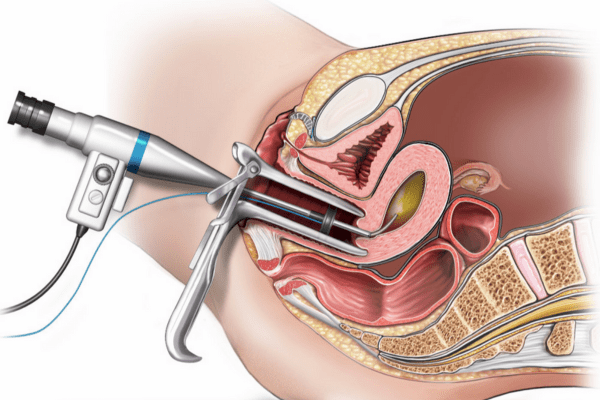
Diagnostic Hysterolaparoscopy combines two keyhole procedures performed under one anesthesia. “Hystero” refers to the uterus; a hysteroscope, which is a thin camera, is inserted through the vagina and cervix to examine the inside of the uterine cavity. “Laparoscopy” pertains to the abdominal cavity; a laparoscope is placed through a small cut near the navel to inspect the uterus, ovaries, and fallopian tubes from the outside.
These two views provide a complete picture of the reproductive organs in one session. This is why the combined approach is often preferred over performing either test alone.
Why is Diagnostic Hysterolaparoscopy Done?
Diagnostic Hysterolaparoscopy is done to investigate the cause of chronic pelvic pain or infertility in women. Some common indications for the procedure include:
- Infertility: When a woman is unable to get pregnant even after trying for a long time. This procedure helps check if there are any issues in the uterus, fallopian tubes, or ovaries.
- Recurrent miscarriages: When a woman has repeated miscarriages. The test helps find problems inside the uterus that may be causing pregnancy loss.
- Endometriosis: A condition where tissue similar to the uterus lining grows outside the uterus, causing pain and fertility problems. This procedure helps confirm and assess its severity.
- Chronic pelvic pain: Long-term pain in the lower abdomen. This procedure helps identify causes like infections, endometriosis, or internal issues.
- Abnormal uterine bleeding: Irregular, heavy, or unexpected bleeding during periods. It helps doctors check for growths, hormonal issues, or other abnormalities.
- Adhesions or scar tissues in the pelvic region: Internal scars that may form after infections or surgeries. These can block or damage reproductive organs, and the procedure helps detect them.
- Ovarian cysts or tumors: Unusual growths in the ovaries. The procedure helps in identifying and evaluating these cysts or tumors for proper treatment.
Hysterolaparoscopy Procedure — Step by Step
1. Anaesthesia: The procedure is done under general anaesthesia, so you’re fully asleep and feel nothing during surgery.
2. Laparoscope insertion: A small cut is made near the navel, and a thin camera (laparoscope) is inserted to view the uterus, ovaries, and fallopian tubes from outside.
3. Abdominal inflation: The abdomen is gently filled with carbon dioxide gas to create space for a clear view of the pelvic organs.
4. Hysteroscope insertion: At the same time, a hysteroscope is passed through the vagina and cervix to examine the inside of the uterine cavity.
5. Dye test (if checking for infertility): A coloured dye is passed through the cervix to check whether the fallopian tubes are open — this is called chromopertubation.
6. Treatment, if needed: If a treatable issue is found — a blocked tube, adhesion, or small cyst — Dr. Kunaal Shinde can often address it in the same sitting.
7. Duration: Most procedures take 30–60 minutes, depending on whether treatment is combined with diagnosis.
8. Discharge: This is a day-care procedure — you’re admitted in the morning and discharged the same evening, occasionally with one night of observation.
Hysterolaparoscopy for Infertility and Blocked Tubes
For couples undergoing an infertility workup, Hysterolaparoscopy for Infertility / Blocked Tubes is often the deciding test before IVF is considered. It checks the uterine cavity for anything that could prevent implantation, and inspects the ovaries and tubes for endometriosis, adhesions, or blockages that imaging alone can miss. Many patients are referred for this procedure specifically because a scan was inconclusive.
Dye Test for Tubal Blockage (Chromopertubation) During Laparoscopy
A key part of the infertility workup is the tubal patency test, also called a dye test or chromopertubation. During the laparoscopy, Dr. Kunaal Shinde passes a coloured dye through the cervix and watches it flow through the fallopian tubes via the camera. If the dye spills freely from both tubes, they are open; if it doesn’t, a blockage is identified — and in many cases, mild blockages can be cleared during the same procedure.
Chocolate Cyst Diagnosis During Laparoscopy
A chocolate cyst (medically called an endometrioma) forms when endometriosis affects the ovary, filling it with old, dark altered blood. These cysts are usually picked up on ultrasound, but laparoscopy confirms the diagnosis directly and allows Dr. Kunaal Shinde to drain the cyst and remove its lining in the same sitting — reducing the chance of it returning and protecting the healthy ovarian tissue around it.
Hysterolaparoscopy Recovery Time
Recovery from Diagnostic Hysterolaparoscopy is quicker than after open surgery. Here’s what to expect:
- First 2-3 days: mild bloating, shoulder-tip discomfort (from the gas used during surgery), and slight soreness at the incision sites — usually manageable with simple pain relief
- Stitches: dissolve on their own within 1-2 weeks; no removal needed in most cases
- Return to routine activity: within 3-5 days for most patients
- Return to work: typically within a week, depending on the nature of your job
- Resuming intercourse and exercise: usually after 2 weeks, once Dr. Kunaal Shinde confirms healing is on track at your follow-up visit
Recovery time can vary slightly if additional treatment (such as cyst removal or adhesiolysis) was performed during the same sitting.
Cost of Diagnostic Hysterolaparoscopy in Pune
| What’s Included | Typical Cost Range (Pune) |
|---|---|
| Diagnostic only — no treatment needed | ₹25,000 – ₹40,000 |
| Diagnostic + minor treatment (dye test, adhesion clearance) | ₹40,000 – ₹55,000 |
| Diagnostic + treatment (cyst removal, tubal correction) | ₹55,000 – ₹70,000 |
What affects your final cost:
- Whether it’s purely diagnostic or includes treatment (cyst removal, adhesiolysis).
- Type of anaesthesia and operation theatre charges.
- Hospital room category and length of stay.
- Pre-procedure tests (blood work, ultrasound).
When Should You See a Gyneacologist
Diagnostic Hysterolaparoscopy is considered a safe and well-established procedure, but it’s still important to know which signs need quick attention. After your Diagnostic Hysterolaparoscopy in Pune or any other area, you should reach out to your doctor right away if you notice:
- Fever or chills lasting beyond the third day
- Nausea, vomiting, or dizziness that doesn’t go away
- Pain that keeps getting worse instead of gradually settling down
- Redness, swelling, or discharge near the incision sites
- Heavy vaginal bleeding
These signs are uncommon, but noticing them early can make a real difference to your recovery. If anything feels off after your procedure, don’t wait it out at home; reach out to Dr. Kunaal Shinde, the best gynecologist in Baner, Pune, and the team at Love Your Belly Clinic for guidance.
Why Choose Dr. Kunaal Shinde for Hysterolaparoscopy
Dr. Kunaal Shinde is a highly skilled Diagnostic Hysterolaparoscopy Surgeon in Pune with extensive experience in performing Diagnostic Laparoscopy and Hysteroscopy.
- 15+ years of experience with 12,000+ surgeries and 25,000+ patients treated
- Fellowship-trained in Gynaecologic Oncology from the Gujarat Cancer & Research Institute, with additional robotic surgery training
- Dedicated focus on infertility-related laparoscopy, including tubal patency testing and endometriosis clearance in the same sitting
- Consults at Love Your Belly Clinic, Baner, and Cloudnine Hospital, Pimple Saudagar — plus surgeries at 13 hospitals across Pune, for patient convenience.
- Personalised, transparent communication so you understand every step before, during, and after the procedure
Book Your Consultation
If you’ve been advised to undergo Diagnostic Hysterolaparoscopy in Pune, or you’d simply like a second opinion on persistent pelvic pain, irregular periods, or difficulty conceiving, Dr. Kunaal Shinde and the team at Love Your Belly Clinic, Baner, are here to guide you through every step — from diagnosis to recovery. Call +91 87 9722 9722 or use the form to book your appointment.
Frequently Asked Questions
Yes, many women do conceive naturally afterward, especially when mild blockages, adhesions, or early-stage endometriosis are treated during the same sitting. This is one of the main reasons Hysterolaparoscopy for Infertility is recommended before couples move toward IUI or IVF — it often resolves the underlying issue rather than just identifying it.
Yes, both are performed together under one anaesthesia. The hysteroscope checks the uterine cavity while the laparoscope examines the ovaries and tubes, giving a complete diagnosis in a single sitting instead of two separate surgeries.
A mild sore throat or grogginess for a few hours is common after general anaesthesia and settles on its own by the next day. It’s a normal part of recovery, not a complication.Accordion Content
Laparoscopy can show physical signs associated with PCOD, such as enlarged ovaries with multiple small cysts, but PCOD itself is mainly diagnosed through hormonal blood tests and ultrasound. This procedure is more useful for ruling out other causes alongside a PCOD diagnosis.Accordion Content
No. Hysteroscopy examines only the inside of the uterus through the vagina. Hysterolaparoscopy combines this with laparoscopy, which also examines the ovaries, fallopian tubes, and outside of the uterus through a small abdominal incision — giving a more complete picture in one sitting.
WhatsApp us