


.png)
- 15/09/2026
- Dr. Kunaal Shinde
- 0 Comments
- Blog
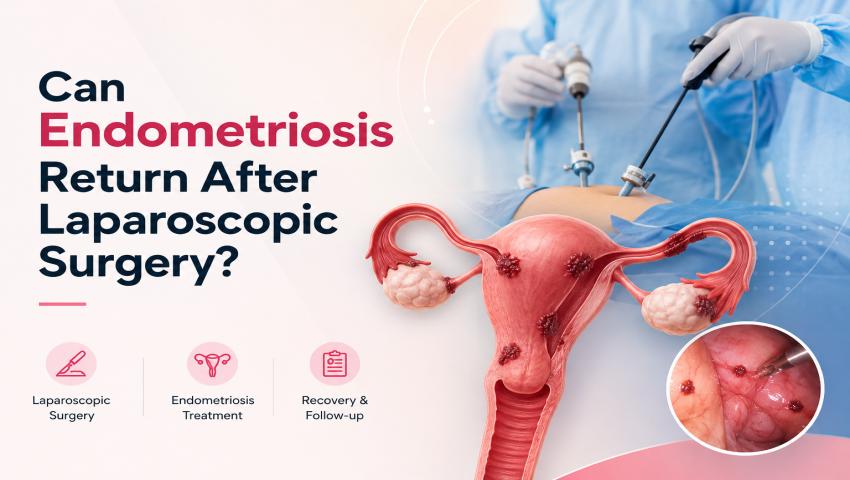
Can Endometriosis Return After Laparoscopic Surgery?
If you’ve recently undergone surgery for endometriosis, experiencing relief from pain is a significant achievement. But a quiet worry often follows close behind: can endometriosis come back after surgery? It’s a fair question, and the honest answer is yes, it can sometimes come back. Understanding why, how often, and what you can do about it puts you back in control instead of leaving you anxious every time you feel a twinge.
What Happens During Laparoscopic Surgery for Endometriosis?
Laparoscopic surgery is currently the most effective method for diagnosing and treating endometriosis. A surgeon makes a few small cuts in the abdomen, inserts a thin camera, and either cuts away or burns off the misplaced tissue causing pain.
Patients undergoing laparoscopic surgery for endometriosis usually go home the same day or the next, with a much shorter recovery than open surgery. The goal during the operation is complete disease clearance, meaning the surgeon removes every visible patch of endometriosis, not just the obvious ones.
That said, “complete clearance” is a surgical goal, not always a guarantee. Microscopic cells can sometimes remain invisible even to an experienced eye.
Can Endometriosis Really Come Back After Surgery?
Yes, it can. Endometriosis is a chronic condition, and surgery treats the disease you can see rather than curing the underlying tendency for tissue to grow abnormally.
Many women ask whether endometriosis can return after laparoscopic surgery, expecting a simple yes or no. The honest answer sits somewhere in between: recurrence is possible, but a well-performed surgery, especially one focused on complete excision, meaningfully lowers that risk.
It also helps to separate two things patients often confuse: new disease growth versus leftover tissue that was never fully removed the first time. Both can feel identical from the outside, but they matter for how your doctor plans follow-up care.
How Common Is Endometriosis Recurrence?
Recurrence rates vary across studies, partly because researchers define “recurrence” differently; some track pain return, others track visible disease on imaging or a second surgery.
These numbers can look alarming out of context, but they represent averages across many different surgical skill levels, disease stages, and follow-up care plans. A patient guide from the Gloucestershire NHS Foundation Trust notes that deeper deposits are surgically excised through the same small incisions, and thorough excision plays a real role in how long relief lasts.
Excision vs Ablation: Does the Technique Affect Recurrence?
Not all laparoscopic surgery is the same. Two main techniques exist, and choosing between them can genuinely affect your long-term outcome.
The 2022 ESHRE endometriosis guideline recommends that clinicians consider excision over ablation to reduce endometriosis-associated pain. Excision that achieves complete disease clearance in the first surgery gives patients a genuinely better shot at lasting relief.
Factors That Raise Your Risk of Recurrence:
Recurrence isn’t random. Certain factors make it more likely, and knowing them helps you and your doctor plan smarter follow-up care.
- Younger age at first surgery, since more reproductive years mean more time for disease to regrow
- Advanced disease stage, especially deep infiltrating endometriosis or large endometriomas
- Incomplete excision during the original procedure
- Skipping postoperative hormonal therapy, or stopping it before 18 to 24 months
- Not becoming pregnant after surgery, since pregnancy can offer temporary protective effects
- Surgeon experience, as complex excision requires specialized skill
None of these factors guarantee recurrence on their own. They simply shift the odds, which is exactly why personalized follow-up planning matters.
Early Signs Endometriosis May Be Returning:
Catching recurrence early usually means simpler, less invasive treatment. Watch for these warning signs after surgery.
- Pelvic pain that gradually creeps back, especially around your period
- Pain during sex that wasn’t there right after surgery
- Digestive symptoms like bloating, diarrhea, or constipation tied to your cycle
- Heavier or more irregular periods than before
- New or worsening lower back pain
If your pain doesn’t clearly follow your period, it’s worth learning how to deal with pelvic pain other than menstrual cramps, since not every ache after surgery points to recurrence. Some discomfort has entirely different causes, and a proper evaluation avoids unnecessary worry.
Can Anything Be Done to Lower the Risk?
Yes, several strategies genuinely reduce your chances of recurrence, even though nothing eliminates the risk completely.
- Postoperative hormonal suppression, typically continued for at least 18 to 24 months
- Choosing a surgeon experienced in complete excision, not just ablation
- Regular follow-up visits, so any regrowth gets caught early rather than late
- Pregnancy planning discussions, since pregnancy can offer a temporary pause in disease activity
- Maintaining a healthy weight and staying active, which supports overall hormonal balance
Your doctor will weigh these options against your age, symptoms, and whether you’re planning a future pregnancy. There’s no single formula that fits every patient.
Treatment Options If It Comes Back:
If endometriosis does return, you’re not starting from zero. Your doctor now has more information than the first time around.
Options typically include:
- Repeat laparoscopic excision, especially for localized, deep, or painful lesions
- Hormonal therapy adjustments, switching medications, or extending treatment duration
- Pain management strategies alongside medical or surgical treatment
For women who have completed their families and face repeated, severe recurrence, doctors sometimes discuss total laparoscopic hysterectomy as a more definitive option. This isn’t the first-line answer for most patients, but it remains available for carefully selected, difficult cases.
Meet Dr. Kunaal K. Shinde:

Dr. Kunaal Shinde
Dr. Kunaal K. Shinde is a laparoscopic and robotic gynecologic surgeon with over 15 years of clinical experience and more than 12,000 surgeries performed. He is recognized as one of the few surgeons in India known for achieving complete disease clearance during the primary endometriosis surgery itself.
His approach focuses on thorough excision rather than quick ablation, directly addressing one of the biggest factors linked to recurrence. Patients appreciate his honest, evidence-based counseling about what surgery can and cannot promise.
Book a Consultation:
Worrying alone about whether your symptoms mean recurrence rarely helps. A proper evaluation gives you clarity instead of guesswork.
If your pain has returned or you simply want a second opinion on your surgical plan, you can book an appointment for a detailed consultation, including a review of your surgical history and current symptoms.
Conclusion:
So, can endometriosis return after laparoscopic surgery? It can, but the risk isn’t fixed or the same for everyone. Surgical technique, disease stage, follow-up care, and your own biology all play a role in how long your relief lasts.
The good news is that thorough excision surgery, consistent follow-up, and honest conversations with your doctor genuinely shift the odds in your favor. If you’re worried about recurrence or noticing symptoms creeping back, don’t wait for things to worsen before seeking help.
Reach out for an evaluation and a treatment plan built specifically around your history and goals.
FAQs:
Yes, though it’s less common. If both ovaries are removed along with the uterus, recurrence becomes rare, but it can still happen if endometriosis tissue remains elsewhere in the pelvis.
Some women notice symptoms within months, while others stay symptom-free for years. Recurrence timing depends on how completely the original disease was removed and whether hormonal therapy followed.
No, it significantly lowers the risk but doesn’t eliminate it entirely. Endometriosis tissue outside the ovaries can still remain active even after both ovaries are removed.
Pregnancy can offer temporary protection, since it pauses ovulation and menstruation for months. This effect isn’t permanent, though, and symptoms can return after delivery or breastfeeding ends.
Not always. Many recurrences are managed successfully with hormonal therapy or pain management alone, and surgery is usually reserved for severe, localized, or fertility-related cases.
There’s no proven diet that prevents recurrence, but maintaining a healthy weight and staying active supports overall hormonal balance. These habits work best alongside medical treatment, not as a replacement for it.