


.png)
Fallopian Tube Cancer
Fallopian Tube Cancer Treatment in Pune
Looking for fallopian tube cancer treatment in Pune, or trying to understand a diagnosis you’ve just received? You’re in the right place. This is a rare cancer, making up close to 1 in every 100 gynecologic cancer cases. For years, doctors called it the rarest cancer of the female reproductive system. It’s usually diagnosed after menopause, most often in the late 50s to mid-60s. Newer research has also found that many cancers once labeled as ovarian actually start in the fallopian tube itself, which is why both are staged and treated the same way.
Very few surgeons in India hold a formal fellowship in Gyneacologic Oncology. Dr. Kunaal Shinde is one of them, a Gynaec Cancer Surgeon trained at the Gujarat Cancer & Research Institute, who has carried that training into over 12,000 surgeries across 25,000+ patients in 15 years. That’s not general gynecology experience applied to a cancer case. It’s cancer-specific training, built through actual repetition, at Love Your Belly Clinic, Baner, Pune.
Below, you’ll find what causes this cancer, the symptoms to watch for, how it’s diagnosed and staged, your treatment options, and what recovery looks like.
What is fallopian tube cancer?
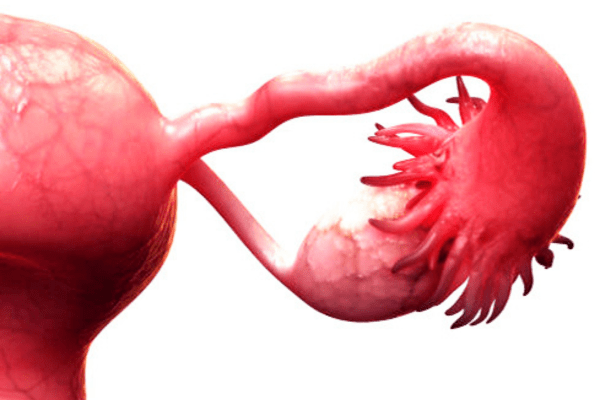
Fallopian tubes are two thin, roughly 10 cm-long ducts that carry eggs from your ovaries to your uterus each month. Fallopian tube cancer begins when abnormal cells grow uncontrolled in the tissue lining one or both tubes. In the vast majority of cases, this starts in the same epithelial tissue that acts like ovarian cancer and primary peritoneal cancer.
Is Fallopian Tube Cancer the Same as Ovarian Cancer?
Not exactly the same, but they overlap a lot. Fallopian tube cancer starts in the tube connecting your ovary to your uterus. Ovarian cancer starts in the ovary itself. That sounds like two separate diseases, and technically, it is. But doctors have found something important: many ovarian cancers actually begin in the fallopian tube first, then spread to the ovary. Because both cancers often share the same starting point, they’re staged the same way, treated with the same surgery, and usually the same chemotherapy drugs. In practice, this means your treatment plan looks almost identical, whichever one you’re diagnosed with.
What causes fallopian tube cancer?
The exact causes of Fallopian Tube Cancer are not known. However, some factors that may increase the risk of developing this type of cancer are:
- Genetic alterations that are inherited, such as BRCA1 and BRCA2
- Having close relatives (mother, sister, daughter) with ovarian or breast cancer increases the risk.
- The majority of the diagnoses occur in women over 63.
- Hormone replacement therapy menstrual problems, after menopause, early menstruation, and late menopause.
- Infertility issues and having no pregnancies.
- Conditions like Lynch syndrome and Peutz-Jeghers syndrome.
What are the symptoms of fallopian tube cancer?
Symptoms of fallopian tube cancer often hide behind everyday complaints. That’s exactly why women miss them, and why it’s worth watching for a pattern, not just one sign.
- Abdominal pain or bloating: A feeling of pressure or fullness that doesn’t ease off, even after digestion should be done.
- Abnormal menstruation: Periods turning heavier, lighter, or more irregular than what’s normal for you.
- Chronic back pain: A dull ache low in the back that lingers for weeks, with no clear cause.
- Feeling full quickly: Getting full after just a few bites, even during a small meal.
- Frequent urination: Needing the bathroom far more often than usual, without a urine infection to explain it.
- Painful intercourse: Pain during sex that’s new, or that keeps happening.
- Pelvic pain or mass: Pain low in the belly, sometimes with something you can actually feel.
- Upset stomach (indigestion): Nausea or discomfort that doesn’t match anything you ate.
- Watery or bloody vaginal discharge: One of the more specific signs, since it’s less common in other conditions.
None of these alone points to cancer: But if a few show up together and stay for more than two weeks, it’s worth getting checked.
How is fallopian tube cancer diagnosed?
No single test confirms fallopian tube cancer on its own. Doctors build the picture step by step, moving from conversation to confirmation.
- It starts with talking and a physical exam: Your doctor asks about your symptoms, your periods, and any cancer history in your family. A pelvic exam follows next. This simple check can reveal a mass or tenderness that needs a closer look.
- Blood tests and imaging come next: A blood test checks for CA-125, a protein that often rises when this cancer is present. Alongside that, a pelvic ultrasound gives the first real image of what’s happening inside. If anything looks unclear, a CT or MRI scan adds more detail before any decision gets made.
- Finally, doctors confirm it by looking directly: This usually happens through laparoscopy, a keyhole procedure that lets your doctor see the tubes and ovaries up close. In some cases, this step doubles as treatment too, not just diagnosis. A biopsy, a small tissue sample sent for testing, gives the final, definite answer. Once that report comes back, your treatment plan gets built around exactly what’s found.
How is fallopian tube cancer staged?
Dr. Kunaal Shinde is the best Obstetrician & Gyneacologist in Baner, Pune,who uses staging to explain the cancer’s location and spread. These facts help providers select the most useful therapy.
Stages of fallopian tube cancer include:
- Stage 1: One or both fallopian tubes may be affected by cancer
- Stage 2: Cancer affects a fallopian tube and nearby tissues in the pelvic region
- Stage 3: Cancer has migrated to organs or lymph nodes outside of the pelvic area
- Stage 4: Cancer can influence the liver as well as far-off organs like the mind or lungs
How is fallopian tube cancer treated?
The treatment indicated by Dr. Kunaal Shinde for fallopian tube disease is identical to that prescribed for ovarian cancerous growths. Among the possible therapies are:
- Surgery: The main approach is to remove as much of the cancer as possible. This often involves removing the uterus (hysterectomy) and the affected fallopian tube and ovary (salpingo-oophorectomy).
- Chemotherapy: Administered before surgery to shrink the tumor or post-surgery to destroy remaining cancer cells. Common drugs include carboplatin and paclitaxel.
- Targeted Therapy: This focuses on halting the growth of specific cancer cells, causing minimal damage to healthy cells.
- Clinical Trials: Patients may choose to receive novel, in-development medicines.
Why Choose Dr. Kunaal Shinde for fallopian tube cancer treatment in Pune?
- Lower Risk, Better Outcomes : A fellowship in Gyneacologic Oncology from the Gujarat Cancer & Research Institute, backed by 12,000+ surgeries across 25,000+ patients.
- A Plan Built Around You : Dr. Kunaal Shinde walks you through your reports and scans in simple terms, so you understand exactly what you’re dealing with before deciding on next steps.
- Faster Recovery, Less Pain : Trained in robotic, laparoscopic, and open surgery, so your procedure gets chosen for your case, not limited to one method.
- Easy Access : Consults at Jupiter, Cloudnine, Manipal, and Todkar hospitals across Pune, so you can choose whichever is most convenient.
- A Specialist You Can Trust : A member of the Association of Gyneacologic Oncologists of India, a group specifically for cancer-trained gynecologic surgeons.
Book An Appointment:
Finding the right doctor shouldn’t be the hardest part of this. Dr. Kunaal Shinde handles fallopian tube cancer care in full: diagnosis, staging, surgery, and follow-up, all under one roof at his own clinic, Love Your Belly. He’s also available at Jupiter, Cloudnine, and Manipal hospitals across Pune, so you can pick whatever’s closest to you. Call +91 87 9722 9722, or book your appointment online, and walk out of your first visit with an actual plan.
Frequently Asked Questions (FAQ's):
Cost depends on your stage and the treatment you need. In Pune, surgery alone usually costs between ₹1.5 lakh and ₹4 lakh. If chemotherapy is added, total treatment can go up to ₹3 lakh to ₹8 lakh. You'll get an exact figure only after diagnosis and staging, during consultation.
Dr. Kunaal Shinde, an experienced Obstetrician & Gyneacologist in Pune, specializes in treating gynecological cancers, including fallopian tube cancer. He can provide expert care and guidance throughout your treatment journey.
Treatment for fallopian tube cancer typically involves surgery to remove the affected fallopian tube and ovary (salpingo-oophorectomy). Chemotherapy and radiation therapy may also be recommended, depending on the stage and extent of the cancer.
There's no sure way to prevent it. But if you carry a BRCA1 or BRCA2 gene mutation, your risk rises sharply. That's why many women in this group choose risk-reducing surgery, removing the tubes and ovaries once their family is complete. Genetic counselling helps you decide if it's right for you.
Fallopian tube cancer is genuinely rare. Out of every 100 gynecologic cancer cases, only about one turns out to be this type, making it one of the least common cancers a gynecologist will ever diagnose. It typically shows up after menopause, most often between the late 50s and mid-60s.
Click to edit sample text of accordion content lacus quam faucibus in aliquam vitae placerat pretium eros. Aliquam et pulvinar odio vitae imperdiet purus amet blandit eros.
WhatsApp us