


.png)
Ovarian Cancer Treatment in Pune
An ovarian cancer diagnosis changes everything. One moment, life is normal. Next, you are trying to understand a condition that feels overwhelming, a treatment plan that seems complicated, and a future that suddenly feels uncertain. That uncertainty is real. But so is this: ovarian cancer is treatable, especially when caught early, and the quality of the surgeon and treatment team you choose makes a direct difference to your outcome.
If you are looking for a trusted ovarian cancer treatment in Pune, this page will walk you through everything you need to know, from what ovarian cancer is to what treatment involves and how to choose the right specialist. As a dedicated Gynaec Cancer Surgeon in Pune, Dr. Kunaal Shinde is fellowship trained in gynaecological oncology and performs complete ovarian cancer debulking surgery to the highest clinical standards.
What Is Ovarian Cancer?
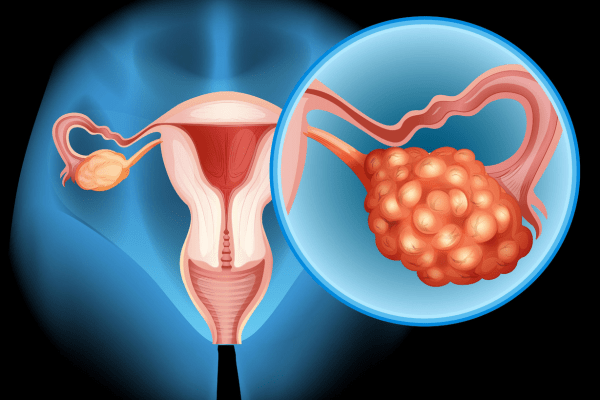
Ovarian cancer is a condition where abnormal cells in or around the ovaries begin to grow in an uncontrolled way. The ovaries are two small glands on either side of the uterus that produce eggs and hormones like oestrogen and progesterone.
What makes ovarian cancer particularly challenging is that it often has no obvious symptoms in the early stages. By the time symptoms appear and a woman seeks medical attention, the cancer has frequently spread beyond the ovaries. This is why it is sometimes called a silent cancer.
Early detection gives the best outcomes. Stage 1: ovarian cancer has a five-year survival rate of over 90 percent. That number drops significantly in later stages, which is why any persistent or unusual symptoms should be evaluated promptly.
Types of Ovarian Cancer
Not all ovarian cancers are the same. The type affects how the cancer behaves, how it responds to treatment, and what the prognosis looks like.
- Epithelial ovarian cancer: The most common type, accounting for about 90 per cent of all ovarian cancers. It starts in the thin layer of tissue covering the outer surface of the ovary. High-grade serous carcinoma is the most aggressive subtype.
- Germ cell tumours: These start in the egg-producing cells of the ovary. They are more common in younger women and generally have better treatment outcomes compared to epithelial types.
- Sex cord stromal tumours: These develop in the structural tissue cells of the ovary. They are rare and often produce hormones, which can cause symptoms like abnormal bleeding.
- Borderline ovarian tumours: Also called low malignant potential tumours, these are not strictly cancerous but have cells that look abnormal. They grow slowly and rarely spread, but do need treatment.
Causes and Risk Factors of Ovarian Cancer
Ovarian cancer does not have a single known cause. But several factors are known to increase the risk. Knowing them helps women make informed decisions about screening and early consultation.
- Age: Risk increases significantly after menopause. Most cases occur in women over 50.
- Family history and genetics: Women with a first-degree relative who had ovarian or breast cancer carry a higher risk. BRCA1 and BRCA2 gene mutations significantly increase lifetime risk.
- Endometriosis: Women with endometriosis, particularly those with endometriomas, have a modestly higher risk of certain ovarian cancer types.
- No prior pregnancies: Women who have never been pregnant have a slightly higher risk.
- Hormone replacement therapy (HRT): Long-term use of oestrogen-only HRT after menopause has been associated with increased risk.
- Ovarian cysts: Most ovarian cysts are benign, but some complex or persistent cysts need evaluation to rule out malignancy. If you have a known cyst, an early consultation for Ovarian Cyst Treatment in Baner is advisable rather than waiting.
Having a risk factor does not mean you will develop ovarian cancer. But it does mean you should have regular gynaecological check-ups and discuss screening with your doctor.
Symptoms of Ovarian Cancer Women Often Ignore
The symptoms of ovarian cancer are easy to dismiss because they are common and non-specific. Bloating, tiredness, and mild abdominal discomfort can have dozens of explanations. This is exactly why ovarian cancer is frequently detected late.
- Persistent bloating or a feeling of fullness that does not go away
- Pelvic or abdominal pain that is new or worsening
- Difficulty eating or feeling full very quickly
- Frequent urination or urgency without a urinary infection
- Unexplained weight loss or weight gain
- Irregular or unusual vaginal bleeding, particularly after menopause
- Fatigue that is persistent and not explained by other causes
- Changes in bowel habits without a dietary explanation
Gynaecological cancers often share risk factors and require similar oncological expertise. For women also concerned about cervical health, Cervical Cancer Treatment in Pune is available alongside ovarian cancer care at Love Your Belly Clinic.
How Is Ovarian Cancer Diagnosed?
Because symptoms are vague and routine smear tests do not check for ovarian cancer, diagnosis usually involves a combination of investigations.
- Pelvic examination: A physical examination to feel for any masses or abnormalities around the ovaries and uterus.
- Transvaginal ultrasound: A detailed scan that checks the size, shape, and texture of the ovaries and any suspicious masses.
- CA-125 blood test: A tumour marker that is elevated in many cases of ovarian cancer. It is not definitive on its own but is used alongside imaging.
- CT or MRI scan: Provides a detailed picture of the extent of disease and whether cancer has spread to other organs.
- Surgical staging: The definitive diagnosis and staging of ovarian cancer is confirmed at surgery, where tissue samples are examined under a microscope.
If your ultrasound scans or CA-125 blood tests reveal suspicious findings, an immediate consultation with an experienced ovarian cancer specialist in Pune ensures timely staging and precise surgical planning.
Stages of Ovarian Cancer
| Stage | Where the Cancer Has Spread | Usual Treatment |
|---|---|---|
| Stage 1 | Limited to one or both ovaries or fallopian tubes | Surgery. Chemotherapy may not be needed in some early Stage 1 cases. |
| Stage 2 | Spread within the pelvis — uterus, bladder or rectum | Surgery followed by chemotherapy, often around 6 cycles depending on the case. |
| Stage 3 | Spread to the abdominal lining, omentum or lymph nodes | Surgery and chemotherapy. Chemotherapy may be given first. HIPEC may be considered in selected cases. |
| Stage 4 | Spread beyond the abdomen — such as lungs, liver or distant lymph nodes | Chemotherapy may be given first, followed by surgery if the disease responds. Targeted therapy may be considered when appropriate, including for certain BRCA-positive cancers. |
Cost of Ovarian Cancer Treatment in Pune
| Treatment | Estimated Cost |
|---|---|
| Diagnostic tests (CT/PET, CA-125) | ₹20,000 – ₹60,000 |
| Laparoscopic surgery | ₹80,000 – ₹2,00,000 |
| Robotic surgery | ₹2,00,000 – ₹3,50,000 |
| Debulking (cytoreductive) surgery | ₹2,50,000 – ₹5,00,000 |
| HIPEC | ₹5,00,000 – ₹8,00,000 |
| Chemotherapy (per cycle) | ₹15,000 – ₹80,000 |
| Targeted therapy (per month) | ₹50,000 – ₹1,50,000 |
Ovarian Cancer Treatment Options in Pune
Most women with ovarian cancer need a combination of surgery and chemotherapy. The type, stage, and overall health determine the exact plan.
- Surgery
The goal of surgery is complete removal of all visible cancer, a process called optimal debulking. This typically includes the ovaries, fallopian tubes, uterus, omentum, and any visible cancer deposits. The completeness of this first surgery is the single strongest predictor of long-term outcome. - Chemotherapy
Chemotherapy follows surgery in most cases, using a combination of carboplatin and paclitaxel over multiple cycles. In advanced cases, chemotherapy may be given before surgery to shrink the tumour first, followed by surgery and then further chemotherapy. - Targeted Therapy
Women with BRCA gene mutations may be offered PARP inhibitor therapy after chemotherapy as maintenance treatment. This helps prevent recurrence by blocking cancer cells from repairing their DNA.
Why Choose Dr. Kunaal Shinde for Ovarian Cancer Treatment in Pune?
If you are looking for the ovarian cancer specialist in Pune with dedicated expertise in gynaecological oncology, Dr. Kunaal Shinde combines surgical precision, oncology training, and a patient-first approach that is rare in a single specialist.
- Fellowship trained in Gynaec Oncology from the Gujarat Cancer and Research Institute, Ahmedabad. This is a dedicated subspecialty qualification in the surgical and oncological management of gynaecological cancers.
- 15+ years of clinical experience with more than 12,000 surgeries performed and 25,000 plus patients treated across Pune.
- Robotic surgery is certified by the International College of Robotic Surgeons, enabling precision surgery for complex cancer cases.
- Founder of Love Your Belly Clinic, Baner, a women’s healthcare centre focused on holistic and evidence-based care.
- Consults at Love Your Belly Clinic, Baner and Cloudnine Hospital, Pimple Saudagar, and performs robotic and open ovarian cancer surgery at 13 hospitals across Pune.
- Active member of FOGSI and AGOI (Association of Gynaecologic Oncologists of India), reflecting commitment to the highest standards of gynaec oncology practice.
Book An Appoitment
Ovarian cancer responds best to early, expert surgical treatment. If you have been diagnosed or are concerned about your symptoms, call +91 87 9722 9722 or schedule a consultation with a trusted ovarian cancer specialist at Love Your Belly Clinic, Baner, Pune.
FAQs About Ovarian Cancer Treatment in Pune
Persistent bloating, pelvic pain, difficulty eating, and frequent urination are the most common early signs. The problem is that these symptoms are often dismissed as digestive or hormonal issues. If two or more of these symptoms are present consistently for more than two weeks, a gynaecological evaluation is strongly recommended.
Most Ovarian Cyst Treatment in Baner cases involve benign (non-cancerous) cysts that resolve on their own or are removed with laparoscopic surgery. Ovarian cancer involves malignant cells that grow aggressively. The distinction is made through ultrasound, blood tests, and sometimes surgery. Not all cysts are cancerous, but all complex or persistent cysts need evaluation.
Surgery is usually the first step for ovarian cancer, but it’s not always possible. If the cancer is advanced or a woman isn’t fit for an operation, doctors may start with chemotherapy (medicine that kills cancer cells) instead. Targeted drugs and hormone therapy are also used in some cases, often alongside chemotherapy, to control the disease.
Doctors use the FIGO system, a globally accepted staging method, to describe how far ovarian cancer has spread, from Stage I to Stage IV. Stage I means the cancer is only in the ovaries. Stage IV means it has reached distant organs like the liver or lungs. Your stage decides your treatment plan.
The cost depends on the stage, the type of surgery needed, and whether chemotherapy or targeted therapy follows it. Treatment can range from a few lakhs for early-stage cases to significantly more for advanced disease needing multiple chemotherapy cycles. Dr. Shinde’s team shares a clear cost estimate after your first consultation.
Love Your Belly Clinic in Baner, Pune, led by gynaecologic oncology surgeon Dr. Kunaal Shinde, specializes in ovarian, cervical, uterine, and vulvar cancer care using advanced laparoscopic and robotic surgical techniques. With 15+ years of experience, Dr. Kunaal Shinde offers expert, personalized treatment.
The standard approach combines surgery to remove the tumor with chemotherapy, usually carboplatin and paclitaxel, sometimes alongside targeted therapy like bevacizumab. The exact plan depends on the cancer’s stage, subtype, and biomarker results, so oncologists customize treatment for each patient’s specific diagnosis and needs.
WhatsApp us